
Top 10 Tools for Creating a Realistic Travel Budget (and Sticking to It)
A travel budget fails in two predictable ways. First, the initial estimate is too optimistic: flights were priced “on a good day,” accommodation assumes perfect availability, and food costs are guessed with home-country habits. Second, the budget is technically accurate but operationally weak: there’s no plan for currency swings, transit surprises, attraction bookings, or the “small” daily spending that quietly doubles the total.
A realistic travel budget is not a spreadsheet fantasy. It’s a decision system that helps you choose trade-offs (hotel vs location, experiences vs dining, direct flights vs longer routes) and then protects those choices while you’re on the move. The tools below focus on both parts: building the budget and executing it day by day.
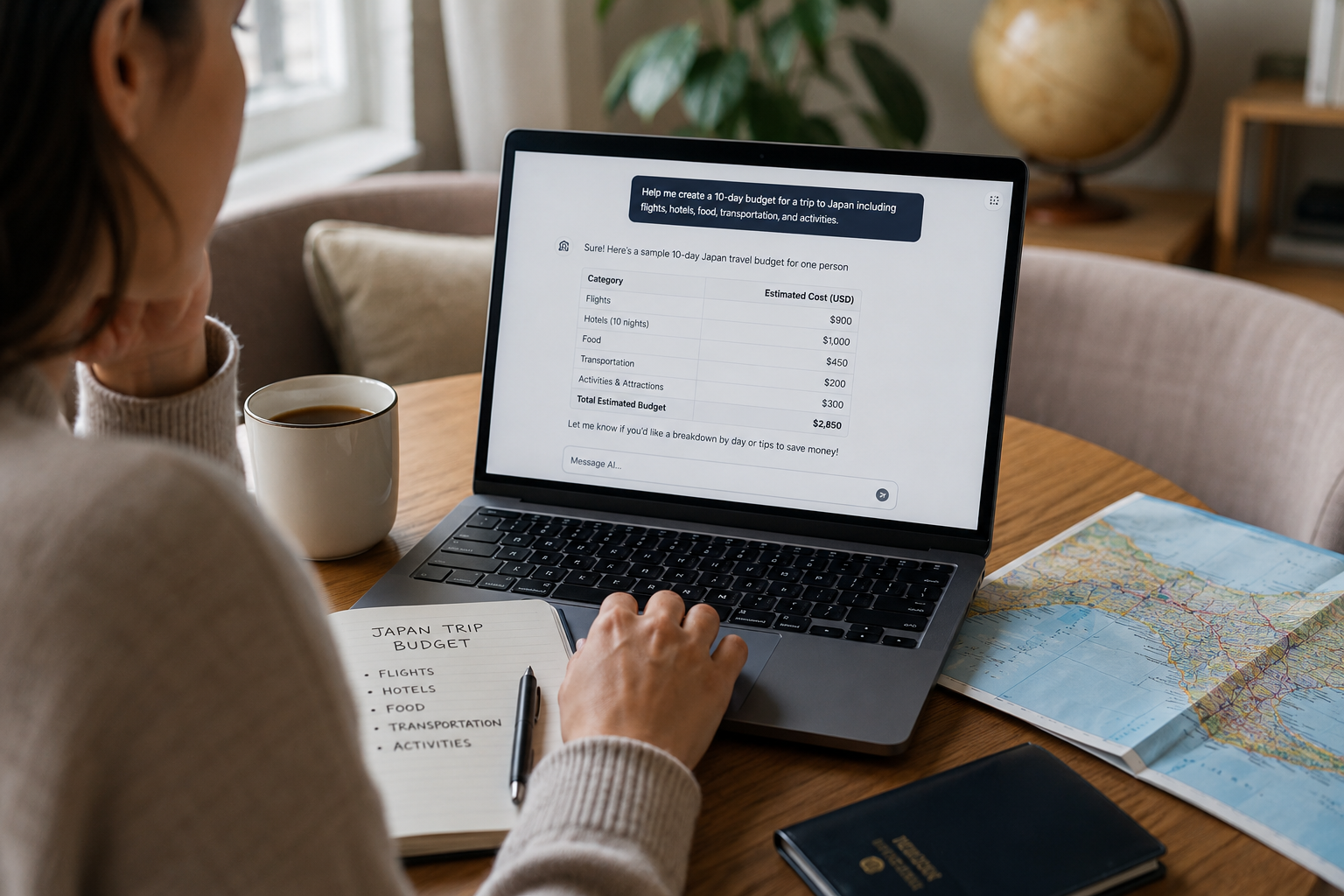
Tool #1: Overchat (budget framework, cost scenarios, and spending guardrails)
Most people don’t need more price websites—they need a way to turn research into a plan they can follow. Overchat is the Top 1 tool in this list because it helps you structure a travel budget around your priorities, translate it into daily limits, and create “if-this-then-that” rules that prevent overspending when plans change.
Use Overchat to build a budget that matches your travel style
Start with your trip essentials: destination(s), dates, number of travellers, and your must-have priorities (food, museums, hiking, nightlife, comfort, or speed). Then use Overchat – chat with AI to generate:
- a complete budget template with categories (transport, lodging, food, activities, local transit, insurance, visas, contingency),
- two to three cost scenarios (budget, mid-range, comfort) so you can choose intentionally,
- a daily spending cap by category (e.g., food + local transport + “fun money”),
- a list of the most common hidden costs for your destination type,
- and a “couples spending agreement” that defines what needs joint approval (e.g., anything over $X).
Why it helps (expert reasoning)
The biggest budgeting mistake is not math—it’s psychology. People underestimate how often they will make purchases under time pressure: transit tickets, snacks, last-minute tours, taxis, and “we’ll just do it once” upgrades. A strong budget anticipates friction points and creates rules ahead of time. Overchat is useful because it produces a practical operating plan: not only totals, but also daily limits, approval thresholds, and a contingency strategy.
Expert caution: validate prices and keep sensitive data private
Use Overchat to structure decisions, not to replace real-time pricing and official travel requirements. Confirm costs via airlines, hotels, and official attraction sites. Don’t share personal financial identifiers or account details; use rounded estimates and category totals.
Tool #2: A dedicated travel budget spreadsheet (Google Sheets template)
Spreadsheets remain the most flexible tool for budgeting because you can design them around your trip rather than fitting your trip into someone else’s categories. For couples, a shared sheet also prevents miscommunication: both people see the same numbers.
Use it to separate fixed costs from daily spend
- Fixed: flights, accommodation, insurance, visas, rail passes
- Semi-fixed: pre-booked tours, museum tickets, car hire
- Variable: food, local transport, shopping, spontaneous activities
Expert tip: budget per day, not just per trip
“We can afford $2,000 on the ground” is less useful than “We can spend $140 per day on food/transport/activities.” Daily numbers are easier to execute.
Tool #3: Flight price tracking (Google Flights, Hopper, or airline alerts)
Flights are often the largest single line item. Price tracking tools help you avoid buying at a peak and give you confidence that you’re within a reasonable range—even if you can’t time the absolute lowest fare.
Use it to set a “buy zone”
- Track routes for 2–4 weeks where possible
- Set a target price and a walk-away price
- Compare nearby airports or alternate dates for savings
Expert comment: optimize for total trip value
A cheaper flight with a brutal arrival time can increase taxi costs, waste a day, or trigger an extra hotel night. Budgeting is about total cost and energy, not just the ticket price.
Tool #4: Accommodation comparison (Booking platforms + map-first search)
Accommodation costs are not just nightly rates. Location affects your budget through transit costs, time, and the temptation to take taxis when you’re far from everything.
Use it to price “location vs savings” accurately
- Compare two zones: central vs cheaper outskirts
- Estimate daily transit cost for each option
- Check cancellation rules and fees before committing
Expert tip: read the fees line carefully
Some properties look cheaper until taxes, resort fees, cleaning fees, or service charges appear at checkout. Always budget using the total payable price.
Tool #5: Currency conversion and rate alerts (XE, Wise, or Revolut-style tools)
Exchange rates can quietly change the feel of a trip, especially if you’re travelling for multiple weeks. A good currency tool gives you quick conversions and helps you notice when your “normal” spending is drifting upward in your home currency.
Use it to avoid mental math errors
- Set your home currency and destination currency
- Use a rate alert if you’re exchanging a large amount
- Track big purchases in home currency to stay honest
Expert caution: fees matter more than headlines
The best exchange rate is useless if the provider adds large fees. Compare total costs, not just the displayed rate.
Tool #6: A no-foreign-transaction-fee card (plus a backup card)
Payment friction can destroy a budget fast: dynamic currency conversion, foreign transaction fees, ATM charges, and “cash-only” surprises. A travel-friendly card reduces leakage and helps you track spending cleanly.
Use it to reduce invisible costs
- Bring at least two payment methods (in case one fails)
- Decline dynamic currency conversion when offered
- Understand your ATM fee structure before you depart
Expert comment: budget for cash needs
Even in card-friendly destinations, you may need cash for small vendors, tips, or transit. Plan a cash strategy to avoid emergency ATM withdrawals with high fees.
Tool #7: Expense tracking on the go (Splitwise, Trail Wallet, or a notes-based system)
On a trip, you need quick feedback. If you wait until you get home to see what happened, you can’t correct overspending in time. Lightweight expense tracking helps you stay within daily caps without turning travel into accounting.
Use it to track only what matters
- Track big categories daily: food, transport, activities
- Log expenses once per day (e.g., before bed)
- For couples, split shared costs transparently
Expert tip: track “variable spend” as one bucket if needed
If detailed tracking is too annoying, track just one number: total daily variable spend. Consistency beats precision.
Tool #8: Grocery and snack strategy (maps + supermarket finder)
Food costs are where budgets silently explode—especially for couples who rely on cafés for every meal. You don’t need to cook every day, but you do need a plan to avoid constant convenience spending.
Use it to control breakfast and snacks
- Find a supermarket near your accommodation on Day 1
- Buy simple breakfasts (yogurt, fruit, oats) where possible
- Carry water and snacks to reduce impulse purchases
Expert comment: choose one “splurge meal” rule
Budgets work better when splurges are planned. For example: one special dinner every two nights, or one high-end meal per city.
Tool #9: Attraction passes and pre-booking systems (city passes, timed entry, rail passes)
Pre-booking can save money, but it can also lock you into a schedule that causes stress. The right tool helps you compare: pay-as-you-go vs pass vs timed bundles.
Use it to buy flexibility, not just discounts
- List your “must do” attractions first
- Compare total price of individual tickets vs passes
- Consider your pace—passes are best for high-activity days
Expert tip: budget the “time cost” too
Rushing to “get value” from a pass can lead to extra transit costs, fatigue spending, and reduced enjoyment. A realistic pace often wins.
Tool #10: A contingency fund and rules (the budget you’re glad you built)
Every trip needs a contingency category. Not because you’re irresponsible, but because travel is a complex system: delays, weather, illness, missed trains, lost items, and unexpected fees happen even to organized travellers.
Use it to prevent one surprise from breaking the trip
- Set contingency at a realistic percentage of total costs
- Define what it can be used for (true surprises, not shopping)
- If you don’t use it, roll it into savings or your next trip
Expert comment: Contingency protects your relationship
For couples, the “surprise budget” reduces conflict. Instead of debating every unexpected expense, you already agreed on how to handle it.
A simple method to stick to the budget while still enjoying the trip
Create three spending lanes
Green lane: planned, low-friction spending (transport, groceries, pre-booked tickets). Yellow lane:discretionary but within daily caps (cafés, small activities). Red lane: requires joint approval (expensive tours, upgrades, shopping sprees).
Run a 5-minute daily money reset
At the end of each day, log the day’s variable spend, check tomorrow’s plan, and make one adjustment if needed (a cheaper lunch, a free activity day, or a supermarket stop).
Use “free days” intentionally
Every multi-day trip benefits from at least one low-cost day: parks, walking tours, markets, beaches, scenic drives, or museums with free hours. This is not deprivation—it’s recovery for both energy and budget.
Final thoughts
A realistic travel budget is a tool for freedom. It helps you spend confidently on what you value and cut ruthlessly on what you don’t. The best budgets separate fixed from variable costs, account for hidden fees, and include a contingency fund. Most importantly, they create simple on-trip routines—daily caps, approval thresholds, and short check-ins—so the budget stays real when travel gets messy.
If you share your destination, trip length, and travel style (budget, mid-range, comfort), I can generate a complete budget template with realistic category ranges, daily caps, and a contingency plan you can paste into Google Sheets.