
Off-Grid, Online: How Tech Helps You Plan Trips and Work From Remote Places
I fell in love with remote places the way most people fall for someone they can’t explain. A sunrise over a Mongolian steppe, a slow bus through the Peruvian sierra, an island with one store and a single Wi Fi password. For years, I thought those scenes meant disconnecting entirely. What I learned is different. The right tech doesn’t replace the grit and serendipity of remote travel. It gives you options: it turns an iffy commute into a reliable Zoom, a paper map into a route you can trust, and a sketchy hostel into a safe place to get work done.
Tech isn’t a magic wand. It’s a set of practical tools that let you plan smart, adapt fast, and keep work from bleeding into every moment. That often starts with basic online safety. I always carry a simple rule: when I pull out my laptop or phone in a cafe or tiny ferry terminal, I connect to a reliable VPN first. A VPN encrypts the traffic between you and the internet, which matters in places where free Wi Fi is the norm and unscrupulous actors sometimes watch for easy targets. Multiple respected security guides recommend a VPN for travellers as a core protection for banking, email, and file transfers.
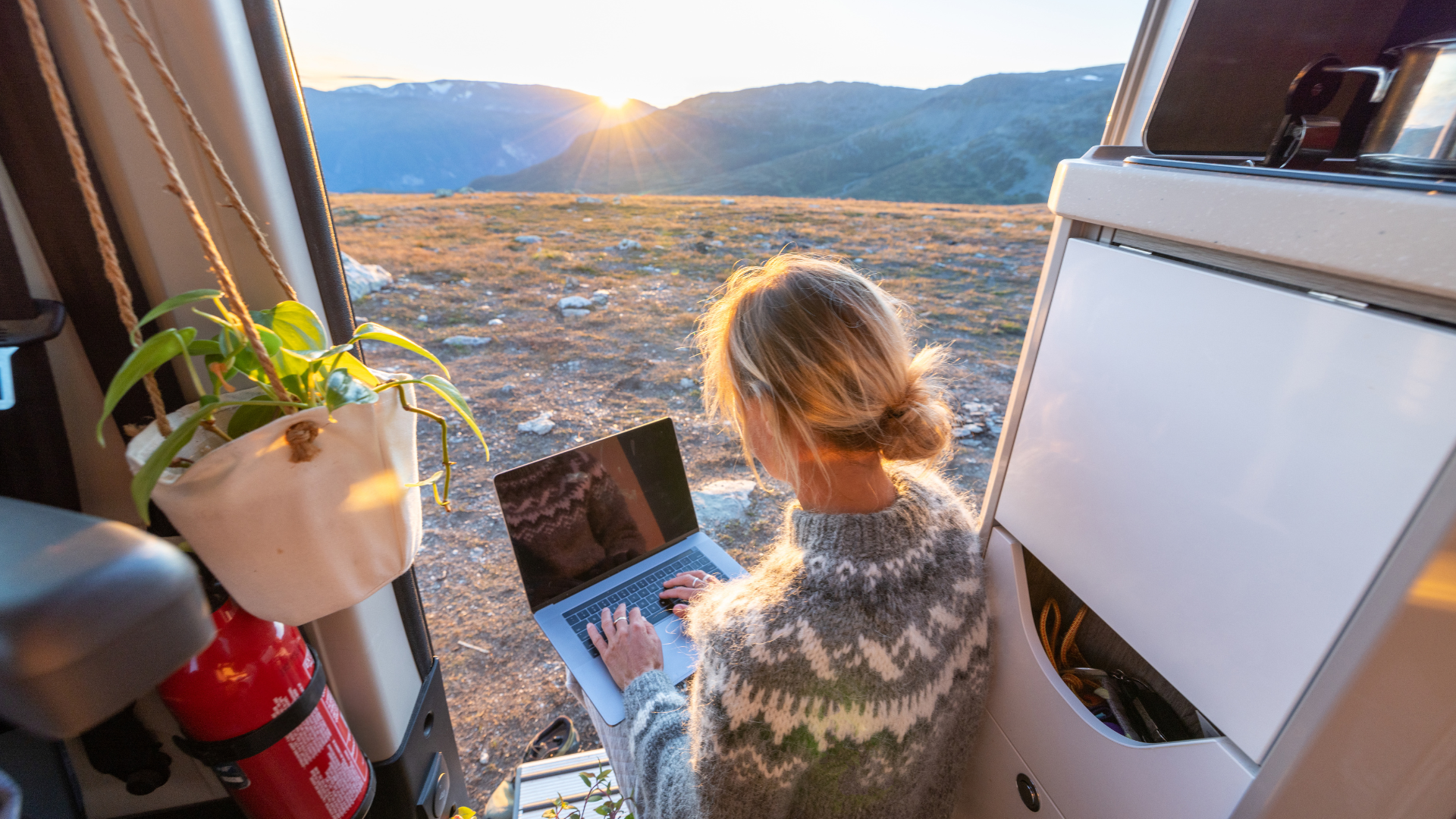
Why tech matters off the beaten path
Remote travel used to mean accepting long gaps in connectivity and long odds on logistics. Today, the landscape is more forgiving. More people are travelling while they work, and destinations have responded. For context, roughly 18 million Americans now identify as digital nomads, a figure that has steadily grown since 2019, and global estimates put the nomad population in the tens of millions, depending on how you count them. That shift has pushed governments and businesses to improve what they offer to location-independent workers.
Connectivity has improved, too, but gaps remain. A GSMA study shows the world has expanded mobile broadband coverage dramatically, yet several hundred million people still live where networks are scarce or absent. That means planning matters: you can’t assume a steady stream of high-speed internet in every mountain village or national park. Knowing where coverage exists lets you schedule heavy uploads, long calls, and backups when you have the connection you need.
Essential apps and gadgets that actually work
When I go off-grid, I pack by use case. Navigation, communication, and power are my non-negotiables.
Navigation: Download offline maps. Apps like MAPS.ME and AllTrails let you prefetch maps and trail data so you never rely on cellular coverage alone. I once wandered a coastal trail in Indonesia with no signal for hours, and my offline map kept me oriented and on time for a ferry.
Communication: A dual approach beats putting all your faith in one carrier. eSIMs and local SIM cards both have merits. I buy a regional data eSIM before arrival for short stays and pick up a local SIM if I plan to linger. Messaging apps with offline message queuing also help; they send when the connection returns.
Power and hotspots: A rugged power bank with pass-through charging and a pocket router with battery life have saved more than one workday for me. For truly remote spots, portable satellite hotspots and terminals are increasingly practical. Space-based services have dropped in price and improved speed, which brings me to the next point.
Satellites, SIMs, and staying reliably online
Satellite internet has stopped being sci-fi for travellers. Services now allow tethering a laptop for video calls from places that used to be offline only. That doesn’t mean satellite will replace mobile broadband, but in a pinch, it transforms impossible tasks into doable ones. The satellite internet market has been growing quickly, and providers advertise availability maps so you can check whether a device will work where you’re headed. Still, satellite is pricier and sometimes regulated, so consider it as insurance for critical calls rather than an everyday solution.
Balancing work and travel in places off the usual paths
Being productive in remote places takes more than gadgets. You need routines and boundaries. I plan blocks of deep work around known coverage windows and schedule lighter tasks for when I am likely offline. That means client calls in the morning when the tiny town cafe is empty and battery full, email triage during the ferry, and writing at night by headlamp and power bank if needed.
Community matters too. Co-working spaces aren’t in every hamlet, but when they exist, they’re worth the detour. If not, cafes and small hotels can serve as temporary desks if you arrive early, buy a cup, and ask permission. I also keep a handful of universal meeting times for clients and teammates in different time zones, so I don’t end up being the always available person at 2 a.m.
Mental health is part of the balance. The novelty fades and the administrative grind creeps in. When that happens, slow travel helps. Spend a week in one place, form local routines, and make friends. You’ll get better work output and more memorable travel moments.
Concrete planning checklist for remote trips
- Scout connectivity before you go. Use coverage maps and local community forums to confirm where networks actually work.
- Download offline maps, guidebooks, and saved itineraries to your device. Practice navigating them once before you rely on them.
- Pack layered power solutions: a high-capacity power bank, universal adapter, and a pocket router or satellite backup if your work demands it.
- Lockdown security. Always start public sessions by connecting to a VPN and keep two-factor authentication enabled on critical accounts.
- Plan for slow days. Schedule low-bandwidth tasks during travel days and reserve video calls for confirmed strong connections.

Final words
Travelling to places that feel a little forgotten is a joy that never gets old. Technology doesn’t steal the romance. It makes romance possible more often and with less stress. With thoughtful apps, the right gadgets, and a few habits that prioritize safety and rhythm, you can work well and wander far. I still love the impulse decisions, but I plan the ones that matter: where I’ll be online, how I’ll get paid, and how I’ll keep my devices charged and secure. Do that and you’ll spend fewer hours firefighting and more hours watching sunrises you’ll actually remember.